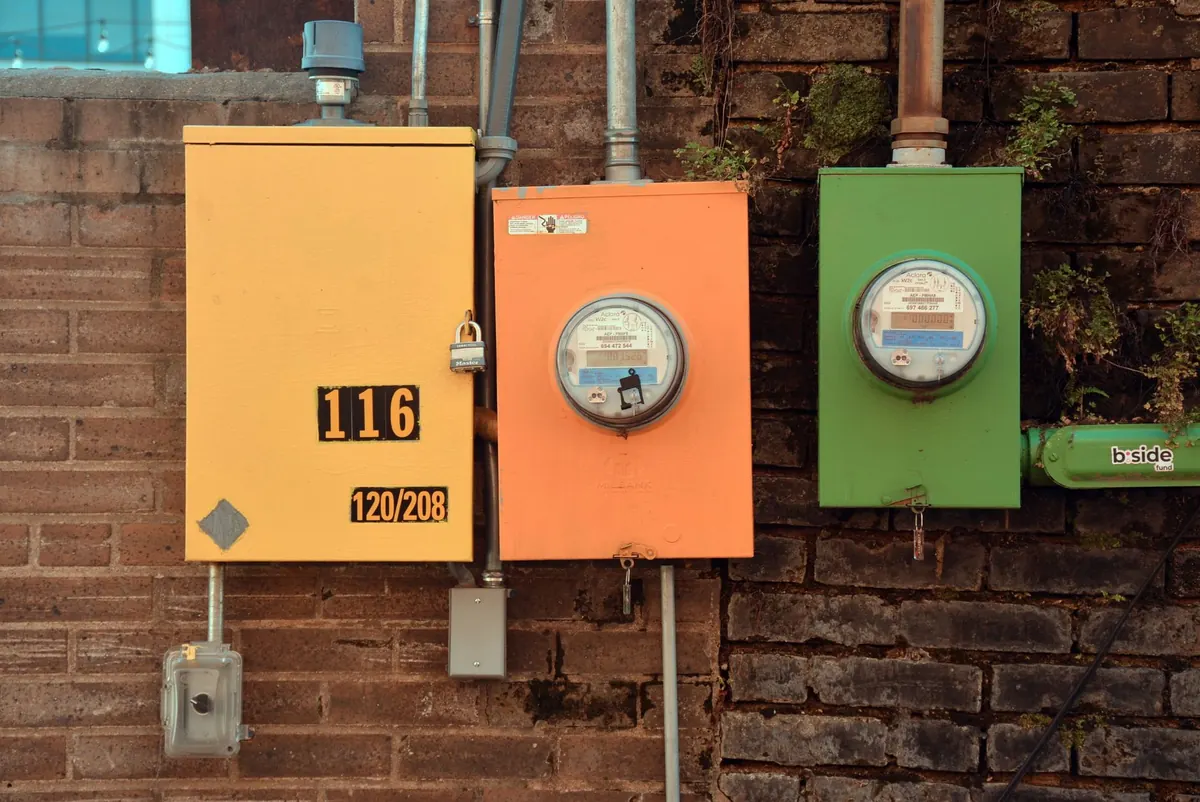
Moving into a London flat is really a logistics exercise. You have the keys, a stack of flattened boxes, and a growing sense that gas, electricity, water and broadband needed sorting yesterday. Most of what goes wrong in the first month is avoidable, and nearly all of it comes down to things done — or not done — on the day you get the keys. None of it is complicated. It just needs to happen in the right order.
Photograph every meter before you unpack a box
Your move-in reading is the line that separates your usage from the previous occupant's. Without it, a disputed bill is your word against the supplier's.
In London, meters hide. A gas meter might sit in a basement cupboard shared with three other flats. Electricity meters turn up in a hallway riser, above a kitchen door, or in an external box on the pavement. In newer blocks, both may live in a plant room you need a fob to enter. If you cannot find them on moving day, ask the letting agent or building manager immediately, not next week.
Photograph the display close enough to read the digits, then photograph the whole meter so the serial number is visible. Note the date. Send the pictures to yourself and keep them. When you register with a supplier, they may ask for the meter serial number, and for electricity the MPAN — the supply number printed on the meter or an old bill.
- Gas: the reading on the display, plus the meter number.
- Electricity: the reading, and whether the meter shows one rate or two (Economy 7).
- Water: the reading, if the property has a meter.
- A wider shot of where each meter lives, so you can find it again in February.
The tariff you inherit is almost never the one you want
When you move in, you are automatically on a deemed contract with whoever supplied the property before. You cannot switch the moment you arrive, but you can register, open an account and start a switch. What you should not do is pay a standard variable rate for a year because the paperwork felt daunting.
Read four things before you sign up to anything:
- Unit rate — the price per kilowatt hour.
- Standing charge — what you pay daily just to be connected, before using anything.
- Exit fees and contract length.
- Whether the price rises partway through, and by what formula.
The energy price cap limits what suppliers can charge on standard variable tariffs, so variable is not automatically a bad choice. A fixed deal gives certainty but can cost more if you leave early or move out. If the flat has storage heaters and a two-rate meter, an Economy 7 tariff may genuinely suit you; if it has a combi boiler and ordinary radiators, one of those rates is likely to cost more than you expect. Check which meter you actually have before choosing.
Tell the old supplier you are leaving and take a final reading on switch day. If you have a disability, a long-term condition, or depend on powered medical equipment, ask to join the Priority Services Register. It is free and gives you extra support during outages.
Water is not a market — stop comparing
Most of London is supplied by Thames Water, with some outer areas served by other companies. There is no switching. What you can do is register your name on the account, so that bills and any leaks on the supply pipe become the supplier's problem to investigate rather than a mystery charge.
If the property is on unmeasured charges, you can usually ask for a meter to be fitted. That is not automatically cheaper — a large household can pay more — so think about your likely usage first. If you already have a meter, read it monthly for the first few months. A jump that does not match your habits usually means a leak or a running toilet, and both waste money quietly.
Broadband: check the building, not just the price
London's housing stock is a patchwork. Some blocks have a single provider wired in, some have full fibre, and some still run on copper that struggles past 30 Mbps. Compare on the postcode, not the headline speed.
- Run the postcode through more than one provider's availability checker.
- Ask neighbours what they have and whether it holds up at 8pm.
- Check indoor mobile signal — thick Victorian walls are unforgiving.
- Read the mid-contract price rise clause, which many providers build in.
Installation slots can be weeks out, especially in older buildings where an engineer needs access to communal areas. Book as soon as you have a moving date, and lean on mobile data in the meantime.
Council tax, TV and the bills-included trap
Register for council tax with your borough within days of moving in, even if you assume the landlord or agent has done it. Single occupants can usually claim a 25% discount, and full-time students are often exempt — but these are claims you have to make, not things that happen automatically. Check with your council.
If you need a TV Licence for what you watch, set it up and update the address when you move. Where rent is advertised as "bills included", read what that actually covers. Ask whether there is a fair usage cap, whose name is on the accounts, and what happens if usage runs high. Rooms in shared houses sometimes have a cap that looks generous in summer and vanishes in January.
Do this in your first week
- Photograph and date every meter reading.
- Note the meter serial numbers, MPAN and MPRN somewhere you will find them.
- Register with the existing energy supplier and open an account in your name.
- Set up council tax and apply for any discount you are entitled to.
- Order broadband once you know what the building supports.
- Put every account number, login and reading into one email to yourself.
Keep the first bill from each supplier and check it against your move-in reading. If something looks wrong, call early — suppliers are far easier to deal with before a debt builds up. If money is tight, tell them rather than letting it slide; they are expected to discuss payment plans, and free independent advice is available from Citizens Advice and your local council. For anything involving a tenancy dispute or a significant sum, get proper advice before you agree to anything.
Photo: John Robertson / Pexels