Seasonal Guide: Where to See Cherry Blossoms in London This Spring
London's cherry blossom does not announce itself. It turns up first on a handful of early trees in sheltered squares — a pale wash of pink above a bus stop, gone before the clocks change — and then builds through April until whole streets look as though someone has hung them with paper lanterns. Catching it at its best is mostly a matter of knowing which cherry you are looking at, and being willing to go out on a Tuesday morning rather than a Saturday afternoon.
That willingness matters more than any list. London is not a single orchard, and its blossom does not peak everywhere at once. A tree in a south-facing garden square may be three weeks ahead of one on a windy heath. The season is a slow procession rather than a switch, which is good news: miss one avenue and another is probably just opening.
Which cherry is flowering, and when
Almost all the blossom you will see in London comes from a small group of Japanese species and cultivated varieties, and they flower in sequence rather than all at once. That stagger is worth understanding, because it turns a two-week social-media event into a six-week season. Learn a handful of trees and you can read the city like a calendar.
Early bloomers: January to March
Winter-flowering cherries, including Prunus x subhirtella 'Autumnalis', can produce small, pale flowers on mild days from late autumn onwards. They are not the frothy pink clouds of spring, but they are a promise. By early March, Prunus 'Okame' and other early cultivars begin in sheltered squares and station forecourts, often while daffodils are still deciding.
Peak blossom: late March to mid-April
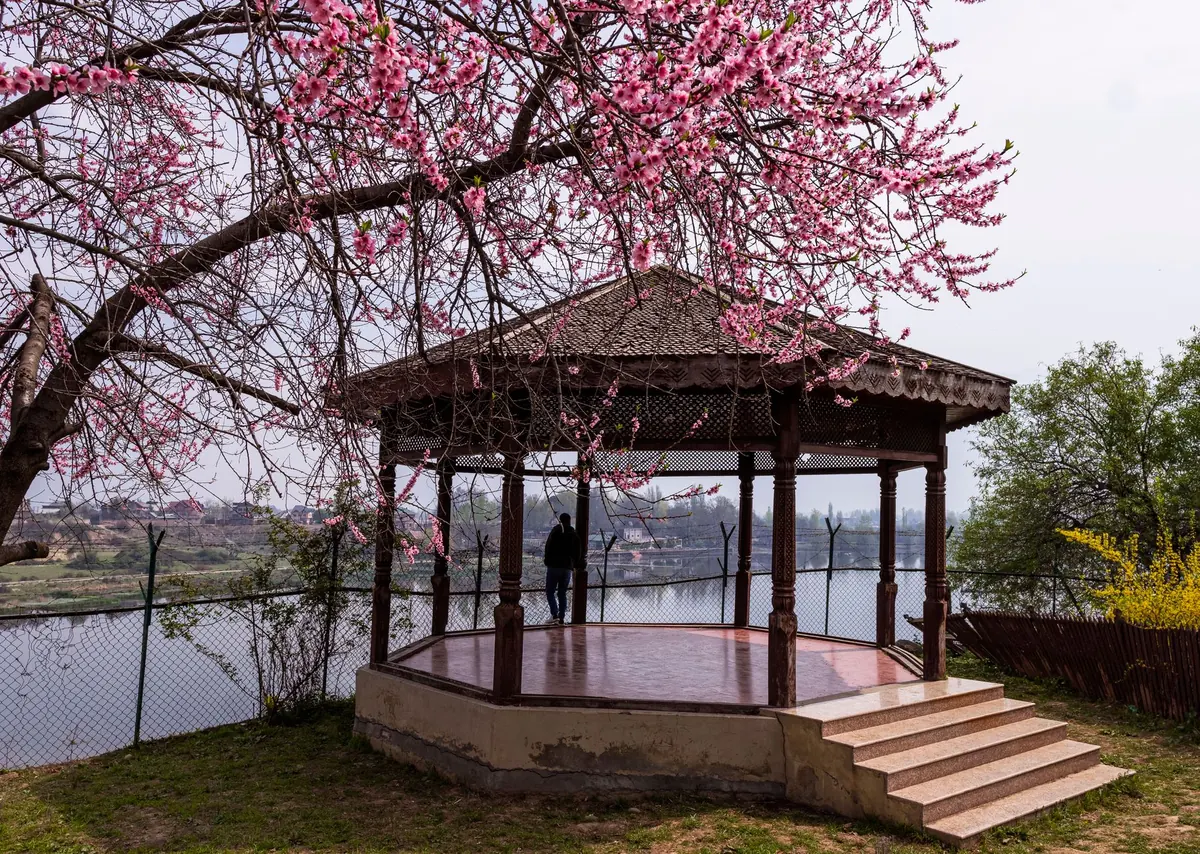
This is the main event. Yoshino cherries (Prunus x yedoensis) and wild cherries (Prunus avium) carry single flowers in white or the faintest pink, opening into a haze that seems to float above the branches. Sargent cherries (Prunus sargentii) bring stronger pink and coppery new leaves. If you only have one free morning, aim for this window — but check local trees first, because a warm spell can push everything forward by a week.
Late season: late April to mid-May
Then come the double-flowered cultivars, above all 'Kanzan', whose heavy pink pom-poms hang in clusters along city streets long after the first petals have blown away. 'Shirotae' offers white double flowers; 'Amanogawa' grows upright like a floral column. These late cherries are the ones that make London feel briefly, improbably extravagant.
Where to see cherry blossoms in London
You do not need to travel far. Some of the best displays are in the middle of town, and some are on ordinary residential streets where nobody has thought to put up a sign.
Parks and gardens
- Kew Gardens — the Cherry Walk and surrounding collections are a masterclass in variety, with labels if you want to learn what you are admiring. Go early, then drift toward the Palm House.
- Greenwich Park — the avenues near the Ranger's House and the path up toward the observatory offer blossom with a view. The hill also catches the wind, so petals move fast here.
- Regent's Park — the avenue gardens, Queen Mary's Gardens and the Outer Circle are reliable, and the formal beds give the blossom a theatrical backdrop.
- St James's Park — small groups of cherries near the lake and Horse Guards make a good lunchtime loop, especially when the pelicans are being dramatic.
- Holland Park — the Kyoto Garden is the obvious draw, but the wider park has quieter trees and a gentler pace.
- Battersea Park, Brockwell Park, Alexandra Palace Park and Ravenscourt Park — all have pockets of blossom, often with fewer crowds and more room to sit.
Streets and squares
Some of London's most photogenic blossom is not in a park at all. Look for mansion blocks in St John's Wood, garden squares in Bloomsbury, crescents in Notting Hill and Islington, and the residential roads around Primrose Hill and Chelsea. The effect is best where the trees meet brick, stucco or a pale church wall. Remember that these are people's homes: keep your voice down, do not block driveways, and never climb a tree for a better angle.
Less obvious spots
- Churchyards and cemeteries — Highgate, Nunhead and Abney Park can be unexpectedly moving in blossom, with old stone and new flowers in the same frame.
- Hospital and school grounds — visible from the street, often planted decades ago, and rarely crowded.
- Canals and railway embankments — the Regent's Canal and some overground lines have self-seeded or planted cherries that flash past between stations.
- Suburban high streets — outer London often has the best ordinary blossom: whole parades of shops under pink, no queue for a photograph.
How to time your visit like a local
The single best tip is to go on a weekday morning. Not because weekends are forbidden, but because blossom plus crowds plus a narrow pavement is a poor combination. Before 9am, the light is soft, the streets are quiet, and you can hear the bees.
Weather matters almost as much as date. A still, dry morning after rain is ideal: the petals are fresh, the pavement reflects a little light, and the air is clear. Wind and heavy rain can strip a tree in hours, so if you see a perfect specimen, enjoy it then rather than promising to return tomorrow. A spell of warm weather accelerates everything; a cold snap slows it down. Treat forecasts as hints, not schedules.
In Japan, hanami is not simply looking at flowers. It is the practice of sitting with them, knowing they will fall.
That attitude suits London well. The blossom is brief, the buses keep coming, and the whole point is to notice anyway.
A short blossom calendar
- Late February to early March: early cherries in sheltered squares; buds on winter-flowering trees.
- Mid to late March: first Yoshino and wild cherry flowers; magnolias overlap.
- Early April: peak single blossom; best week for parks and avenues.
- Mid April: petal fall, often the most beautiful stage for photography.
- Late April to mid May: double 'Kanzan' and late cultivars; streets turn vivid pink.
Blossom etiquette and photography
Cherry trees are generous, but they are not indestructible. Do not shake branches to make petals fall, do not pull blossoms toward you, and do not climb. Keep dogs from digging around roots. If you picnic, take everything home; most Royal Parks do not allow barbecues, and a bin overflowing with picnic rubbish is a poor tribute to spring.
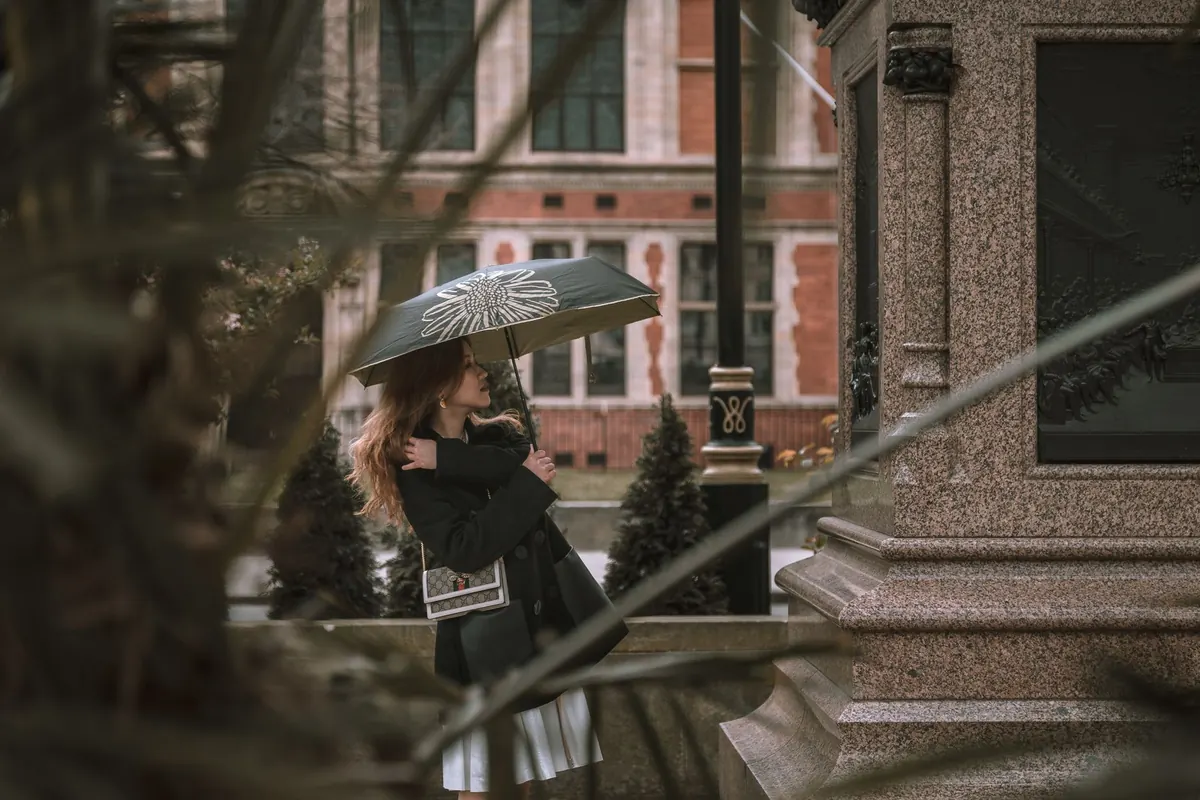
For photographs, overcast light is often kinder than harsh sun, especially for pale flowers. Shoot upward through the branches, use a dark doorway or red bus as a backdrop, and look for reflections in windows or puddles. A close-up of a single flower can be more revealing than a wide shot of a crowd. And if someone is standing under the tree in a beautiful coat, wait — do not pose them. The best London blossom photographs usually include a little ordinary life: a cyclist, a delivery van, a child on a scooter.
After the blossom
When the petals go, the season does not simply end. Cherry leaves emerge, often bronze or deep green, and the trees settle into being shade. Some produce small, inedible fruits that birds will take later. The streets become ordinary again, which is exactly why the blossom mattered. Mark a tree near your home or workplace now, and next year you will know when to look.
London's spring is short and easily missed, but it is also forgiving. If you miss the first wave, there is another. If you miss the second, the double cherries are still coming. The trick is to go out without a grand plan, on an ordinary morning, and let the city show you what is open.
Photo: Mysara Hassan / Pexels